




Introduction: Growth Is Not Just About More Patients
Most small medical practices think growth means one thing. More patients.
More ads. More referrals. Maybe a shiny new piece of equipment that costs as much as a small house.
But here is a less glamorous question.
What if your growth bottleneck is not visibility, but clarity?
Communication problems do not show up on a balance sheet. They show up as confusion, repeat phone calls, and three star reviews that say, “It was fine, I guess.”
And “fine” does not scale.
Why Do Patients Forget Medical Instructions?

Let’s talk about this. Imagine you went in for a consultation. You check in, sit in the waiting room, fill out paperwork, wait some more, meet a nurse, talk, wait again, finally see the doctor who does their best to explain everything, and then ask a few questions back and forth.
By the time you leave the office, things start to feel hazy.
Patients forget a significant portion of what they hear during appointments because stress, unfamiliar terminology, and information overload all reduce retention. In short, they are simply overwhelmed.
Research consistently shows:
- Patients forget 40 to 80 percent of medical information immediately after a visit
- Nearly half of what they do remember may be inaccurate
- Most offices don’t provide a written overview or notes, and there are usually no text reminders or digital traces to go back to
Everything is either in the patient’s head or scribbled in hastily taken notes, which may be incomplete or unclear.
This is exactly why clear communication, written instructions, and timely text follow-ups can make a huge difference in compliance, satisfaction, and outcomes.
The Consequences of Confusion
If instructions aren’t clear, the results are predictable:
- Incorrect medication usage
- Missed follow-ups
- Poor prep compliance
- Frustration and repeat calls
- Lower satisfaction scores
If your front desk hears “Wait, what am I supposed to do again?” five times a day, that’s not a coincidence.
It’s a communication system issue, not a patient problem.
Clarity Builds Trust Before the First Appointment

Imagine a patient searching online late at night. They scroll through your website, click a few links, skim your service pages, and try to make sense of medical terms they barely understand. They’re anxious, curious, and hoping for reassurance all before they even pick up the phone.
What are patients actually looking for online? Most want answers to simple but emotionally loaded questions:
- Does this procedure hurt?
- What does recovery feel like?
- How long does it take?
- What are the risks?
- What will it cost?
If your website avoids these questions or buries them in clinical language, trust erodes before the relationship even starts. Clear communication reduces anxiety. Reduced anxiety increases booking confidence.
That is not marketing theory. That is human behavior.
Why Is Business Texting the New Front Desk?
Everyone is busy these days. Staff, doctors, and patients all have full schedules, and phone calls can easily be missed.
Texting solves this because it is asynchronous. It does not require both parties to be available at the same moment.
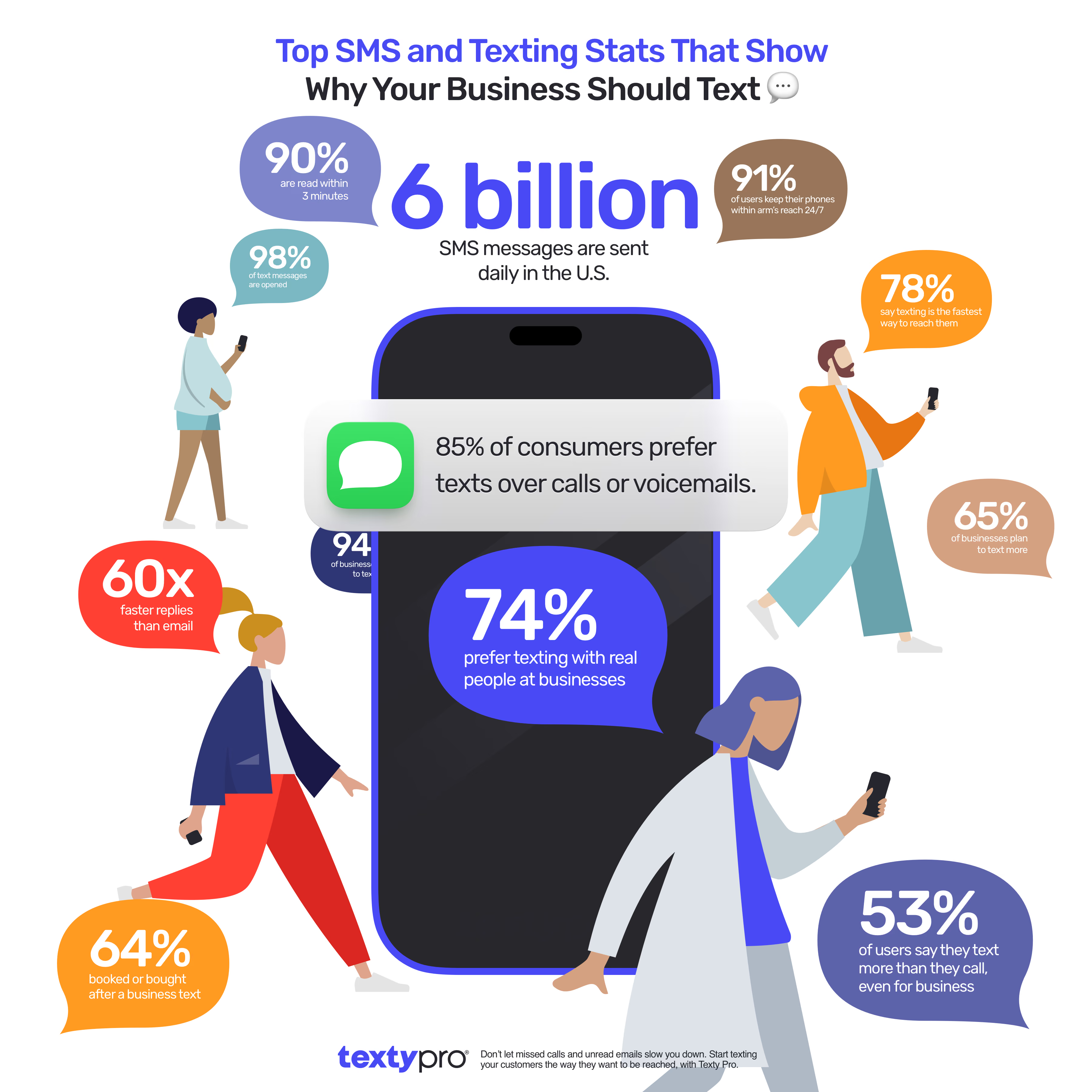
Patients today are far more likely to respond to a text than to answer a phone call. Many prefer texting for confirmations, reminders, and quick questions. It meets them where they already communicate and removes the friction of waiting on hold or chasing someone down.
Why is business texting becoming essential for medical practices?
Because it aligns with how people already communicate.
Patients expect:
- Ability to text the office number directly
- Appointment confirmations by text
- Simple reminders
- Quick clarification without waiting on hold
- Convenient two-way texting with the office
When texting is clear and well structured, it reduces friction.
For example:
Instead of a vague reminder:
“Reminder of appointment tomorrow at 3.”
Send a clearer version:
“Reminder: Your dental cleaning is tomorrow at 3 PM at Main Street Clinic. Please arrive 10 minutes early. Reply C to confirm.”
Small differences. Big impact.
Effective business texting can reduce:
- No show rates
- Last minute cancellations
- Front desk call volume
- Misunderstood prep instructions
And unlike phone calls, texts create a written record patients can re read and patients who receive SMS reminders are up to 50% less likely to no-show.
SMS messages also have an average open rate of 98%, compared to 20% for email. That means your instructions are almost guaranteed to be seen.
And unlike phone calls, texts create a written record patients can re-read which is helpful, because as we established, they forget things.
Looking for text message ideas? Check out our blog on Professional Text Message Templates to Delight Your Customers.
How Can Clear Communication Improve Operational Efficiency?
Growth is not only about new patients. It is also about operational capacity.
Can better communication lower operational costs?
Yes. Because unclear messaging creates repetitive labor.
Think about how often your team answers the same questions:
- “How do I prepare for this procedure?”
- “Is this covered by insurance?”
- “When should I schedule my follow up?”
- “Why is my bill this amount?”
When instructions, confirmation emails, and service pages are written clearly, you reduce:
- Clarification phone calls
- Appointment delays
- Intake confusion
- Billing disputes
- Staff burnout
Clear communication is cheaper than hiring another front desk coordinator. And unlike a new chair, it won’t require assembly or a manual thicker than a dictionary.
For your team, using a text messaging platform like Texty Pro with your current office landline/VoIP number means they’ll be able to use custom templates to quickly answer questions without even having to type.
Online Reviews Are Often Communication Reviews
Here is something interesting.
Patients rarely criticize clinical competence in reviews. Most are not qualified to evaluate that.
Instead, they write things like:
- “I did not know what to expect.”
- “No one explained the process.”
- “I felt rushed.”
- “Billing was confusing.”
Are negative reviews really communication failures?
In many cases, yes.
When expectations are unclear, perception suffers.
Clear communication improves:
- Patient confidence
- Treatment acceptance
- Review sentiment
- Referral likelihood
If two practices have similar credentials, patients tend to choose the one that explains things clearly.
The best communicator often wins. Not the one with the fanciest waiting room.
Business Texting as a Growth Lever
Text messaging is not just a convenience tool. It is a relationship tool.
When used well, it can:
- Reinforce instructions after appointments
- Clarify prep requirements
- Answer quick follow up questions
- Reduce anxiety before procedures
- Reduce missed appointments with instant reminders
- Build trust through timely, personal communication
- Make your practice more accessible and approachable
Imagine this flow for a dental office or physical therapy clinic:
- Appointment booked → confirmation text sent
- Prep instructions summarized clearly
- Reminder text with reply option
- Follow up text checking progress
Patients feel attended to. Staff spend less time on calls. Reviews improve. Retention rises.
And yes, open rates matter: over 90 percent of SMS messages are read within three minutes, so your carefully written instructions actually get seen.
What happens when texting is unclear or inconsistent?
Patients ignore it.
Misunderstand it.
Or call anyway.
Clarity still matters, even in 160 characters.
A Practical Communication Audit for Small Practices
You do not need a full rebrand to see improvement.
Start with your five highest impact touchpoints:
- Homepage
- Primary service pages
- Appointment confirmations
- Post visit instructions
- Billing explanations
- Business texts and SMS communications
For each, ask:
- Is this written in plain language?
- Are sentences short and direct?
- Are patient fears addressed clearly?
- Is the tone reassuring and consistent?
- Would someone outside healthcare understand this easily?
- Does your text/SMS clearly convey the next steps and key information?
If the answer is “no” for any of these, you have hidden growth opportunity sitting in plain sight. Texting in particular is high impact because it is immediate, widely read, and can reduce no shows, confusion, and unnecessary calls.
The Real Growth Question
Most practices ask, “How do we get more patients?”
A better question might be:
What would change if every patient fully understood what happens next?
Clear diagnosis explanation.
Clear treatment plan.
Clear financial expectations.
Clear follow up steps.
When patients understand, they:
- Comply more consistently
- Leave stronger reviews
- Refer more confidently
- Call less frequently for clarification
Clear communication is not just a soft skill. For dentists, chiropractors, physical therapists, and primary care clinics, it is a strategic growth lever.
Tools like Texty Pro can help your practice implement these strategies quickly, keeping patients informed and your team efficient.


